
Skip to content

#220: Using a reverse mortgage to finance home adaptation

USING REVERSE MORTGAGE FUNDING TO STAY ROOTED

While the original plan was, once you’d both retired, to put your home on the market and join several former neighbors at a nearby independent living retirement community, you’ve changed your minds and decided to stay put. Rather than waiting months for just the right spot in that community, then needing to expend much physical effort (and spend many dollars) on moving, you’re now planning to do an interior overhaul centered around the first floor kitchen and bath, turning what was the guest room into your own bedroom. That way, there will be no need to “downsize”, and you can continue to enjoy the furnishings and artwork you’ve so carefully selected and maintained over the years. 

The snag is in the financing. Had you sold, the profit in today’s market would have more than covered the moving and redecorating costs as well as the retirement community “buy-in” fee. You’re reluctant to strip your cash savings and jointly held investment portfolio assets, and, with an excellent credit rating, are considering what your banker calls a cash-out refinance loan. 

As you work towards preparing your home environment to be more age-friendly, you might check out contractors who are specifically trained to do “aging in place” home remodeling, certified through the National Association of Homebuilders. In terms of paying for the interior “overhaul”, consider tapping into the equity you’ve built up in your home through a reverse mortgage rather than a refinance.

With reverse mortgage funding, there will be no obligation to make regular monthly mortgage payments,* nor will you be forced to dip into your investment portfolio assets to pay for the home redesign. Your reverse “line of credit” will enable you to make tax-free** withdrawals as needed to pay the contractors as the work proceeds. Meanwhile, the unused portion of your equity will actually be growing (credited with the same rate of growth as the interest being charged on the borrowed funds).

Your reverse mortgage can help you stay rooted in the home you love, even as it gets a “facelift”.

*Borrower must occupy home as primary residence and remain current on property taxes, homeowner’s insurance, the costs of home maintenance, and any HOA fees. **Please consult a tax advisor. David Garrison, NMLS ID 1595194. Mutual of Omaha Mortgage, Inc. dba Mutual of Omaha Reverse Mortgage, NMLS ID 1025894. 3131 Camino Del Rio N 1100, San Diego, CA 92108. Indiana-DFI Mortgage Lending License 43321. Michigan 1st Mortgage Broker/Lender/Servicer Registrant FR0022702. These materials are not from HUD or FHA and the document was not approved by HUD, FHA or any Government Agency. Subject to credit approval. For licensing information, go to: www.nmlsconsumeraccess.orgEqual Housing Lender

https://mutualreverse.com/david-garrison

#219: Using reverse mortgage funding to satisfy a divorce decree

FAIR-AND-SQUARE DIVORCE DIVVY-UP USING REVERSE MORTGAGE FUNDING

If there is such a thing as an amicable divorce, that’s what the two of you are trying to accomplish. The one item about which there has been no dispute is the occupancy of your home – while your will be continuing to live in Indiana, your soon-to-be ex-wife is relocating to be near her nieces and nephews in Virginia. 

The greatest portion of your assets outside of the home itself is in your respective retirement plans, but there is also a jointly held stock and mutual fund/ETF portfolio, which can be easily split “down the middle”, as your financial advisor has assured you. The only issue is that, in order for her to agree to cede total ownership of the house to you, you would need to part with the largest part of the non-pension investments. Given that you have been the one primarily involved in selecting and monitoring the portfolio over the past several decades, you find that a rather repugnant prospect. 

There’s an alternative to consider. Since it has apparently been agreed that you will be the one continuing to live in the home, your “housing wealth” might prove to be a better source of funding the divorce settlement. Using a reverse mortgage loan based on the equity built up in the home, the proceeds can be used to satisfy your divorce settlement obligation, avoiding the need to liquidate portfolio investments. Post-divorce, with no obligation to make monthly mortgage payments,* you will be under no pressure to liquidate investments.

With you remaining at home, experienced at managing the investments, your ex-wife will have the cash needed for the relocation. In a way, the housing wealth you’ve created while together can help each of you transition into your new, separate futures.  

https://mutualreverse.com/david-garrison

Readers, if you’d like to see what you might qualify for with a reverse mortgage in Indiana, or to download your Reverse Mortgage Guide Click Here (and scroll down).

*Borrower must occupy home as primary residence and remain current on property taxes, homeowner’s insurance, the costs of home maintenance, and any HOA fees. David Garrison, NMLS ID 1595194. Mutual of Omaha Mortgage, Inc. dba Mutual of Omaha Reverse Mortgage, NMLS ID 1025894. 3131 Camino Del Rio N 1100, San Diego, CA 92108. Indiana-DFI Mortgage Lending License 43321. Michigan 1st Mortgage Broker/Lender/Servicer Registrant FR0022702. These materials are not from HUD or FHA and the document was not approved by HUD, FHA or any Government Agency. Subject to credit approval. For licensing information, go to: www.nmlsconsumeraccess.orgEqual Housing Lender

#218: Using reverse mortgage funding for a franchise purchase

HOME EQUITY CAN HELP RETIREE GO FROM EMPLOYEE TO OWNER

          Although you’ve enjoyed success in your long career in sales, it’s always been as an employee rather than as an owner. In fact, your original idea was to take on sales training gigs after retirement (planned for the end of next year). Recently, however, you have become interested in owning and operating a franchise business. You’ve been exploring businesses very different from those of your present or former employer, in fields more in line with your fitness-related hobbies rather than with your past corporate sales experience.

You’ve already begun “stockpiling” cash reserves to cover the initial franchise purchase price, but haven’t wanted to lower your contribution levels to your tax-deferred retirement plans. You also want to avoid cashing in your personal investment portfolio, because you envision those assets remaining in place, generating quarterly and monthly income until you begin to generate cash flow from the new business. A mortgage refinance is also under consideration, since your existing first mortgage is less than one year away from being fully paid.

It’s often a challenge for new franchisees to support themselves until their business takes off, and you’re smart to avoid cashing in your hard-earned investments. However, rather than taking out a second mortgage on your home, consider tapping into the equity you’ve already built up by applying for a reverse mortgage, set up as a line of credit. You’d continue to own, maintain, and live in your home, but you’d have a source of tax-free* funds which you could use as needed, avoiding the need to sell off portfolio assets, and offering security in the early years of business ownership. (In fact, have a reverse mortgage in place as an “asset reservoir” will be seen as a positive when potential franchisors are considering you as a franchisee.

The housing wealth you’ve built over the years can help you transition into building new wealth, this time as a business owner! 

https://mutualreverse.com/david-garrison

Readers, if you’d like to see what you might qualify for with a reverse mortgage in Indiana, or to download your Reverse Mortgage Guide Click Here (and scroll down).

*Please consult a tax advisor. Borrower must occupy home as primary residence and remain current on property taxes, homeowner’s insurance, the costs of home maintenance, and any HOA fees. David Garrison, NMLS ID 1595194. Mutual of Omaha Mortgage, Inc. dba Mutual of Omaha Reverse Mortgage, NMLS ID 1025894. 3131 Camino Del Rio N 1100, San Diego, CA 92108. Indiana-DFI Mortgage Lending License 43321. Michigan 1st Mortgage Broker/Lender/Servicer Registrant FR0022702. These materials are not from HUD or FHA and the document was not approved by HUD, FHA or any Government Agency. Subject to credit approval. For licensing information, go to: www.nmlsconsumeraccess.orgEqual Housing Lender

#217: Using reverse mortgage as backup for Long Term Care insurance

SHIFTING FINANCIAL PREPARATIONS FROM CHILDREN TO SELVES 

With all three of your sons now heads of families, the two of you have begun to focus your attention on your own future financial security, with plans to retire from full time work three years from now (you’re now 63, she is 62). In reviewing your insurance and estate plans, you realize that you had been focused on guaranteeing that your children would be able to enter the professional workforce unencumbered by debt were something to happen to you. 

The emphasis now needs to be on you not becoming a burden to them, which means prepaying for funeral arrangements and resizing the insurance coverage. In reviewing your existing long term care policies and also exploring various other offerings, you have concerns about keeping up with rising premiums post retirement. A related consideration is that your home mortgage has just been fully retired; that, along with the ability to reduce life insurance coverage, will free up some dollars in the monthly budget to use for the long term care coverage.

You’re right to realize that long term care insurance may be of increasing importance as you plan for retirement, reasoning that, relieved of the need to make monthly mortgage payments,* you’ll be better able to fund insurance premiums. However, you might go one step further in viewing your home as a source of funding for your own future financial needs, by arranging for a reverse mortgage line of credit. 

One possible planning tactic might be to increase the monthly benefit on your long term care policies, while lengthening the elimination period (meaning the payout of benefits would begin months after a claim was filed). Both the burden of inevitable future increases in premium on the long term care policies and any at-home or facility care needed during the policies’ “waiting period” would be funded by drawing down your reverse mortgage line of credit. There will be no obligation for you to make monthly mortgage payments* on the reverse mortgage loan. In fact, the unused portion of your equity would be credited with interest at the same rate as that being charged on the outstanding balance. 

By using your own housing wealth, you can shift the focus of your financial and insurance planning from your children to yourselves. 

https://mutualreverse.com/david-garrison

Readers, if you’d like to see what you might qualify for with a reverse mortgage in Indiana, or to download your Reverse Mortgage Guide Click Here (and scroll down).

*Borrower must occupy home as primary residence and remain current on property taxes, homeowner’s insurance, the costs of home maintenance, and any HOA fees. David Garrison, NMLS ID 1595194. Mutual of Omaha Mortgage, Inc. dba Mutual of Omaha Reverse Mortgage, NMLS ID 1025894. 3131 Camino Del Rio N 1100, San Diego, CA 92108. Indiana-DFI Mortgage Lending License 43321. Michigan 1st Mortgage Broker/Lender/Servicer Registrant FR0022702. These materials are not from HUD or FHA and the document was not approved by HUD, FHA or any Government Agency. Subject to credit approval. For licensing information, go to: www.nmlsconsumeraccess.orgEqual Housing Lender

#216: Using reverse mortgage to fund a loan to entrepreneurial nephews

UNCLE’S HOUSING WEALTH CAN HELP BUDDING ENTREPRENEURS

With no children of your own, you have cultivated an especially close relationship with your nieces and nephews over the years, occasionally offering financial help as each of the kids completed degrees and launched careers. Now, with two of your nephews in the process of launching a travel business using a unique concept, you’re considering the wisdom of lending them money as opposed to handing them money. For one thing, you think the extra pressure might serve as an extra incentive to the boys to do what it takes to succeed; for another, you want to be compensated for risking your own finances in retirement. 

As a 68 year old widower, you’ve been able to manage well on your retirement plan and various investments. Your home has been fully paid for and kept in good repair, and you have both health and long term care insurance plans in place. Still, raising the six-figure sum of money you’re now contemplating investing in (or lending to) the nephews’ venture would mean cashing in some assets (Your thought is that later on, if things continue to go well, you might “forgive” the loan.).Your tax advisor has cautioned that there are strict rules concerning intra-family loans, but he is going to help you follow the correct procedures. 

One thing you might consider in place of “cashing in assets” is using the equity you’ve accumulated in your home as the source for funding the gift (or the loan) to your nephews. With no principal or interest payments needed on a reverse mortgage,* there will be no effect on your current investments that are the source of your own income needs. Withdrawals of your equity will be tax free,** and the unused portion of the credit line will earn interest at the same rate as that being charged on your loan (thus fulfilling your wish to “be compensated for risking your own finances in retirement”).

Your own housing wealth might be “the ticket: to helping your nephews’ new travel business – go far! 

https://mutualreverse.com/david-garrison

Readers, if you’d like to see what you might qualify for with a reverse mortgage in Indiana, or to download your Reverse Mortgage Guide Click Here (and scroll down).

*Borrower must occupy home as primary residence and remain current on property taxes, homeowner’s insurance, the costs of home maintenance, and any HOA fees. **Please consult a tax advisor. David Garrison, NMLS ID 1595194. Mutual of Omaha Mortgage, Inc. dba Mutual of Omaha Reverse Mortgage, NMLS ID 1025894. 3131 Camino Del Rio N 1100, San Diego, CA 92108. Indiana-DFI Mortgage Lending License 43321. Michigan 1st Mortgage Broker/Lender/Servicer Registrant FR0022702. These materials are not from HUD or FHA and the document was not approved by HUD, FHA or any Government Agency. Subject to credit approval. For licensing information, go to:www.nmlsconsumeraccess.org Equal Housing Lender

#215: Using a reverse mortgage funding to augment an inheritance

LEAVING YOUR HOUSING WEALTH, NOT YOUR HOUSING, FOR HEIRS

Widowed for the past decade, you’re grateful to have been able to keep up the management of the beautiful home where the two of you raised your children. Your hope is to live out the rest of your years there, but in the process of organizing your estate plan, you’re considering options for passing ownership of the property to your two adult children.  Neither your son nor your daughter wants to actually move here to Indiana, but you’re thinking of transferring half ownership to each while you’re still alive. That way, just in case of a medical setback that would force you to move, there would be no immediate need to prepare the home for selling.  

You should definitely consult an estate planning attorney. Transferring a home to your children during your lifetime (as opposed to naming them beneficiaries in your will or trust) may not be such a good idea, as Greg Daugherty points out in Investopedia. Assuming your home has greatly appreciated in value over the decades, when you die while still owning the home, there would be (under current tax law) a “step-up in basis“, avoiding a large capital gains tax liability for the heirs. That advantage would be lost were you to transfer your home to your children now.

What’s more, transferring ownership of your home to your children can prove a negative if you ever have the need to apply for Medicaid. (If your home was transferred within five years of applying for Medicaid, you would be deemed ineligible because you would have given away assets which could have been used to pay for your care).

You might wish to consider taking out a reverse mortgage as a way of establishing a source of growing wealth earmarked for your children. Although the process would entail some upfront costs, whatever portion of the equity you do not withdraw will continue to grow tax-free. Should you be forced to move out of your home permanently for medical reasons, your children would have six months plus possibly two ninety-day extensions to either sell the home (or satisfy the loan with their own funds).

It may not be practical for your children to inherit your home, but your housing wealth can be a welcome part of your legacy to them.

https://mutualreverse.com/david-garrison

Readers, if you’d like to see what you might qualify for with a reverse mortgage in Indiana, or to download your Reverse Mortgage Guide Click Here (and scroll down).

Borrower must occupy home as primary residence and remain current on property taxes, homeowner’s insurance, the costs of home maintenance, and any HOA fees. David Garrison, NMLS ID 1595194. Mutual of Omaha Mortgage, Inc. dba Mutual of Omaha Reverse Mortgage, NMLS ID 1025894. 3131 Camino Del Rio N 1100, San Diego, CA 92108. Indiana-DFI Mortgage Lending License 43321. Michigan 1st Mortgage Broker/Lender/Servicer Registrant FR0022702. These materials are not from HUD or FHA and the document was not approved by HUD, FHA or any Government Agency. Subject to credit approval. For licensing information, go to: www.nmlsconsumeraccess.orgEqual Housing Lender
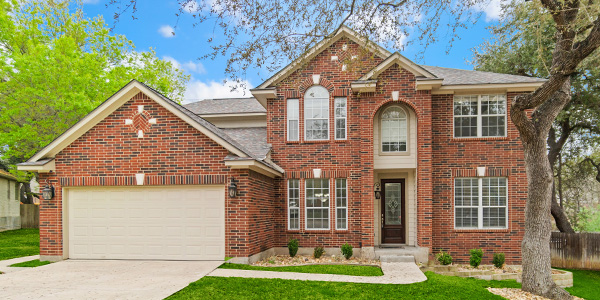
#214: Tapping home equity to avoid taking early Social Security benefits 

REVERSE MORTGAGE AS A MEASURE OF RELIEF FOR BOTH MOM AND DAUGHTER

As the only daughter (and the only unmarried, locally-based child) of a chronically ill parent, you are weighing the decision to retire at the end of the current school year (May 2025), in order to take on some of the duties of caretaking for Mom. You plan to continue occupying your own home (which is fully paid for), and which is fortunately within easy commuting distance of Mom’s condo (where she is determined to stay as long as possible). 

Although your mother has for years been receiving her own social security benefit, her resources are being inexorably depleted by the costs of in-home care; your goal is to relieve some of that financial pressure without severely jeopardizing your own financial future. You qualify for teacher retirement benefits from the state, but that monthly amount would not suffice to cover your own living expenses; you are considering claiming early social security benefits in addition to taking on some part-time teaching and tutoring work. (You’ve done a little research, learning that you will not reach “full retirement age” until the year 2027, meaning that your monthly social security benefit would be reduced quite a bit.) 

One option you appear not to have considered is using the equity built up in your own home as a financial resource. Using reverse mortgage funding, you could draw a monthly income for the next two+ years, avoiding the need to take early social security benefits. So long as you keep up with property taxes, insurance, and regular maintenance (which it sounds like you’ve been doing), you will not be required to make any monthly mortgage payments.* 

A reverse mortgage, set up as a line of credit, might prove the missing piece of the puzzle, as you piece together a plan to include teacher’s pension, part time work, and eventually full-benefit social security income, allowing financial relief for both you and your Mom.

https://mutualreverse.com/david-garrison

Readers, if you’d like to see what you might qualify for with a reverse mortgage in Indiana, or to download your Reverse Mortgage Guide Click Here (and scroll down).

*Borrower must occupy home as primary residence and remain current on property taxes, homeowner’s insurance, the costs of home maintenance, and any HOA fees. David Garrison, NMLS ID 1595194. Mutual of Omaha Mortgage, Inc. dba Mutual of Omaha Reverse Mortgage, NMLS ID 1025894. 3131 Camino Del Rio N 1100, San Diego, CA 92108. Indiana-DFI Mortgage Lending License 43321. Michigan 1st Mortgage Broker/Lender/Servicer Registrant FR0022702. These materials are not from HUD or FHA and the document was not approved by HUD, FHA or any Government Agency. Subject to credit approval. For licensing information, go to:www.nmlsconsumeraccess.org Equal Housing Lender

“Let’s Wait and See What the FED Does”.   

I want to emphasize that this is never a “you have to do this” situation for me. My goal is to educate people so they can make informed decisions. I believe this approach is much better when homeowners choose to act because it’s advantageous, rather than feeling forced with no other options. This strategy can address many cash flow opportunities in either scenario.

One common obstacle I encounter is what I call FOBF, or the “Fear of Being First.” Most people would be surprised to see how many of their neighbors have already utilized a Home Equity Conversion Mortgage (HECM), or reverse mortgage, to extract some profit from their home. A simple search of their zip code could reveal the prevalence of this option.

Often, I hear clients or their advisors say, “Let’s wait and see what the Fed does.” However, this can be the wrong strategy because many don’t understand that Federal Reserve actions may not impact HECM rates — or if they do, it’s often not in a beneficial way. HECM rates are influenced by the performance of the 10-year Treasury, not the Fed’s rates.

For example, in the past three months (August-October 2024), people have questioned why the 10-year Treasury yield is rising even though the Fed cut rates by 50 basis points. The reason is that the Fed only controls the overnight rate, which is the shortest-term lending rate used between banks — comparable to a 24-hour Treasury bill (which, of course, doesn’t actually exist). In contrast, the 10-year Treasury yield is on the longer end of the bond yield spectrum. It is a forward-looking index, meaning any anticipated moves by the Fed are priced into the 10-year yield immediately. Therefore, the Fed’s actions often have little impact on the 10-year Treasury when they actually occur.

So, if you or your clients are waiting for a rate drop as it relates to a HECM, there is usually minimal to no benefit from waiting. In fact, there can be a disadvantage, since the money could have been growing and compounding in a line of credit during those months. Just some food for thought!

Keep in mind that the rate on a HECM does not come with a mandatory payment obligation of monthly mortgage payments*; instead, it determines how much the mortgage balance increases each month. Here’s an example of why waiting may not be beneficial: Suppose someone has $100,000 available in a line of credit, growing at today’s rate (compounded monthly, for this example). If they decide to wait six months, hoping for an event like an election or a Fed meeting to cause a favorable rate change, they could miss out on the compounded growth during that period.

Even if the 10-year Treasury yield drops by a quarter of a point over those six months, the difference would typically only result in a few hundred dollars. Locking in the line of credit earlier could secure a growth window with a defined floor and ceiling of guaranteed earnings, which seems more reliable than waiting on the Fed’s unpredictable decisions.

In the end, the Fed’s actions might have no impact on the line of credit’s earnings over those six or three months, or we might even start with a higher or lower rate. Remember: a lower rate equals slower growth in the line of credit, while a higher rate means faster growth. If you have any questions about this or other scenarios, I’m here to educate.

Donald Battista, NMLS ID 2030959. *Borrower must occupy home as primary residence and remain current on property taxes, homeowner’s insurance, the costs of home maintenance, and any HOA fees. Mutual of Omaha Mortgage, Inc. dba Mutual of Omaha Reverse Mortgage, NMLS ID 1025894. 3131 Camino Del Rio N 1100, San Diego, CA 92108. Arizona Mortgage Banker License 0926603. Florida Mortgage Lender Servicer License MLD1827. Louisiana Residential Mortgage Lending License 1025894. Oklahoma Mortgage Lender License ML012498. Texas Mortgage Banker Registration 1025894. These materials are not from HUD or FHA and the document was not approved by HUD, FHA or any Government Agency. Subject to credit approval. For licensing information, go to: www.nmlsconsumeraccess.org | Equal Housing Lender

#213: Using a reverse mortgage to buy investment property

HOME EQUITY 

Retired for the past nine years, the two of you have found various ways to supplement your income, with your wife teaching dance at a local studio and you doing handyman work and assisting at a roofing company. You long ago made the decision to continue living in your home, which is fully paid for and in excellent repair. While you do each have an IRA rollover portfolio and also jointly held investments, you’ve recently been reading up on the advantages of investing in rental property. Your intent is not to keep “flipping” homes, but to find one or two modest houses that need some remodeling, improve the properties, then offer those for rent. You both know younger couples who would appreciate that type of home and who would make good tenants.

From your reading, you know that the IRS would allow you to deduct some of the costs of maintaining those properties, and your own handyman and roofing expertise will prove valuable. Long term, you see this plan as a way of diversifying your sources of income. You’ve not yet pinpointed a specific site, but you know that, tax-wise, you will be able to deduct, for tax purposes, the costs of insurance, maintenance, and physical wear-and-tear on properties you acquire. Meanwhile, the reality is that you don’t want to commit sufficient funds to purchase properties for cash; however, you expect to have little trouble in qualifying for mortgage funding.

Rather than incurring mortgage debt on rental properties, consider using the successful real estate “investment” you’ve already made – your own home equity. Using a reverse mortgage line of credit, you can fund the purchase of and the improvement of rental investment property. With no obligation to make regular payments* on the reverse mortgage loan, you’ll be using your existing housing wealth with the goal of increasing “housing wealth” through new real estate ownership.

https://mutualreverse.com/david-garrison

Readers, if you’d like to see what you might qualify for with a reverse mortgage in Indiana, or to download your Reverse Mortgage Guide Click Here (and scroll down).

*Borrower must occupy home as primary residence and remain current on property taxes, homeowner’s insurance, the costs of home maintenance, and any HOA fees. David Garrison, NMLS ID 1595194. Mutual of Omaha Mortgage, Inc. dba Mutual of Omaha Reverse Mortgage, NMLS ID 1025894. 3131 Camino Del Rio N 1100, San Diego, CA 92108. Indiana-DFI Mortgage Lending License 43321. Michigan 1st Mortgage Broker/Lender/Servicer Registrant FR0022702. These materials are not from HUD or FHA and the document was not approved by HUD, FHA or any Government Agency. Subject to credit approval. For licensing information, go to:www.nmlsconsumeraccess.org Equal Housing Lender