
Skip to content

#60 Using a Reverse Mortgage to Renovate

REVERSE MORTGAGE FOR A LIFT AND A SWIRL

David Garrison
Home Equity Retirement Specialist
NMLS # 1595194
Serving the State of Indiana
p (317) 644-2595 c (765) 516-0130
e [email protected]

2169 East Rutland Lane, Martinsville, IN 46151
Corporate NMLS #1025894

After much back-and-forth discussion, with each other, friends, the doctors, you’ve decided that despite the severe problems you’ve been having in navigating around your three- story home, you are going to do everything possible to spend the rest of your lives right there. You’ve always kept your home well maintained, even periodically modernizing the décor, but hadn’t realized just how expensive it was going to be to make certain adaptations strongly recommended by your medical providers. First on the list will be converting a downstairs room to a bedroom, along with enlarging the downstairs bathroom and installing a walk-in, whirlpool tub. You’ve come to grips with the fact that an access ramp and even an indoor chair lift might be needed later on.

While you theoretically have sufficient investment assets to foot the bill for all of this,most of the money is in tax-deferred accounts and that large of a withdrawal, even spread over a two year period, would create a problem. As a next step, your plan is to meet with a banker to discuss taking out a home equity line of credit, which would spread the payments over a longer period of time.

Using the wealth you have accumulated in your home to adapt it to your future needs might offer the solution. With a reverse mortgage set up as a line of credit, you can withdraw funds, tax-free, on an as-needed basis to cover the various stages of adapting the home for your present and future needs. Each adaptive redesign can be financed at the time it is being done, and there will be no need to make repayments until the home is one day sold.

Your reverse mortgage line of credit can be a convenient way to finance each home adaptation at the time it is needed.

The Harry Connick song talks of “A Wink and a Smile”. Your reverse mortgage can finance a “lift and a swirl”!

https://mutualreverse.com/david-garrison

#59 Using A Reverse Mortgage to Finance Dental Costs

USE HOUSING WEALTH TO RESTORE A SMILE

David Garrison
Home Equity Retirement Specialist
NMLS # 1595194
Serving the State of Indiana
p (317) 644-2595 c (765) 516-0130
e [email protected]

2169 East Rutland Lane, Martinsville, IN 46151
Corporate NMLS #1025894

Eight years into full retirement, you have been able to maintain your lifestyle needs very comfortably, particularly given the nice gains in your portfolio over the past year or so. At the same time, two things have you worried: First, the recent dramatic increase in the price of food and gasoline has you concerned about sustaining your current lifestyle. Second, you are contemplating a series of cosmetic dental procedures that are not covered by any of your health insurance policies. You’re reluctant to spend, in just two payments (which would be needed to avoid incurring finance charges) an amount equivalent to nearly half your annual income. Your home is paid for, and your intention is to live there indefinitely. Mortgage payments would undoubtedly carry a lower interest charge than the medical loan, but you’re hesitant to take on a long-term, monthly debt obligation.

Tapping your housing wealth through a reverse mortgage might provide the answer to your several concerns. Set up as a line of credit, your mortgage would allow you to take a take two lump sum withdrawals to cover the costs of the elective dental procedures. These withdrawals would be tax-free. Longer term, your reverse mortgage could function as a safety net, to the extent costs of living escalate to the point where you feel unable to comfortably pay for groceries and gasoline out of your regular income. So long as you continue to occupy the home, you will not be obliged to pay off the loan. Of course, you’d continue to be responsible for property taxes, insurance, and maintenance (just as you are right now.) Since a reverse mortgage is a “non-recourse” loan, neither you nor your heirs will be liable for any amount that exceeds the then-market value of the home itself.

Seems as if tapping into your housing wealth could relieve your worry and help put a big, beautiful smile on your face!

https://mutualreverse.com/david-garrison

#58 Including Heirs in Reverse Mortgage Planning

INCLUDING HEIRS IN REVERSE MORTGAGE PLANNING

David Garrison
Home Equity Retirement Specialist
NMLS # 1595194
Serving the State of Indiana
p (317) 644-2595 c (765) 516-0130
e [email protected]

2169 East Rutland Lane, Martinsville, IN 46151
Corporate NMLS #1025894

Comforted by the fact that all three of your adult children are financially stable, the two of you have been able to focus during this first year of retirement (you both turned 70 earlier this year), on arranging your affairs so as never to become a burden to them. Key elements in that planning have included pre-paying for funeral arrangements and cemetery plots, purchasing life insurance with long-term care provisions, and updating your estate planning documents.

Until now, you have not been in the practice of discussing your plans with your children or their spouses, other than giving your offspring powers of attorney should one of you be deceased with the other of you incapacitated. But in the course of applying for a reverse mortgage on your home, you’ve learned about the decisions your heirs will face once both of you are gone, and you’re now considering bringing the children into the conversation after all.

You are heartened by the fact that your heirs will have no responsibility for the deficit should the value of the home be less than the debt at the time of your death. On the other hand, should your children decide to sell the property and the proceeds exceed the amount owed on the mortgage debt, those excess funds will go to the heirs. Your children will have up to 360 days to decide how they wish to handle the situation, and will be required to keep the utilities turned on and the property insurance maintained until the home is sold. As you’ve realized, it will be a good idea to educate your heirs now about both of your intentions and about their responsibilities after the second of you passes.

You can take pride in having brought up three children who have “made their way in the world,” as well as in your own very thoughtful contingency and estate planning.

https://mutualreverse.com/david-garrison

#57 Reverse Mortgage Broadens Choices Post-Divorce

STAYING HOME POST-DIVORCE

David Garrison
Home Equity Retirement Specialist
NMLS # 1595194
Serving the State of Indiana
p (317) 644-2595 c (765) 516-0130
e [email protected]

2169 East Rutland Lane, Martinsville, IN 46151
Corporate NMLS #1025894

In the fourth year of a second marriage that unfortunately is not going to work out, you are in the process of exploring your legal and personal options prior to filing for divorce. One definite is that you plan to remain in your home, which is titled in your name alone, a fact agreed upon prior to your marriage, and as per the agreement, you have continued to be responsible for all mortgage payments. Still, it is the ongoing upkeep expenses of the home that have become one of the main sources of disagreement between the two of you.

Despite the financial discord that has tainted your marriage, you realize that as part of a couple, you have been able to afford certain lifestyle luxuries that might be out of your reach once you’re on your own again. You’re hardly without means, having both a monthly pension and a regular distribution from of your investment account. However, having moved almost directly from widowhood into this second marriage, you worry about managing financially on
your own (actually, for the first time in your life).

Tapping into the equity in your home in the form of a reverse mortgage might provide the answer to some of your questions. Yes, you’ll still need to pay real estate taxes, insurance, and cover all maintenance costs (with no help from a spouse), but you’ll be relieved of the mandatory monthly mortgage payments. Set up as a line of credit and the reverse mortgage will allow you to make tax-free withdrawals for some of those lifestyle “extras”. Once you’ve
regained a sense of financial control, you may find you wish to make some reverse mortgage loan repayments after all.

Drawing on your own housing wealth might be the secret to regaining the financial ‘control” you crave, without the need to rely on a partner for help with upkeep expenses and lifestyle luxuries.

https://mutualreverse.com/david-garrison

**This is not legal advice and should not be construed as such. Please consult a legal and/or tax professional.

#56 Reverse Mortgage as an Inflation Hedge

LET YOUR HOUSING WEALTH BE YOUR UMBRELLA

David Garrison
Home Equity Retirement Specialist
NMLS # 1595194
Serving the State of Indiana
p (317) 644-2595 c (765) 516-0130
e [email protected]

2169 East Rutland Lane, Martinsville, IN 46151
Corporate NMLS #1025894

Now almost five years into a “three-quarters retirement”, you had been feeling pretty good about the degree to which consistent planning and savings have been playing out in terms of your ability to maintain a comfortable standard of living in retirement. Some part time work along with various community activities have kept you just busy enough. Your insurance has been kept up to date, including a long term care policy, and your home upkeep is where it needs to be (you’re planning to stay in this home for life, and the mortgage will be paid off in three more years.). As a single man with no children, you treasure your independence, as does your companion of many years, who is financially stable in her own right, preferring to continue residing in her own home in a neighboring town.

Your only real (and growing) concern relates to the price increases you’re seeing in everything from gasoline to groceries. While your retirement plan allows for an average annual cost of living increase of 3%, recent price hikes have far surpassed that level. You could take on more your part-time assignments, but do not want to become dependent on an ever lengthening work week.

You’re certainly not alone in your concern. In fact, the authors of a recent USNews article, “Advisors Urge Clients to Plan for Inflation,” observed that “investors didn’t have to concern themselves, as the core inflation rate remained fairly muted while equity markets raced higher. That may be changing.”

https://money.usnews.com/financial-advisors/articles/advisors-urge-clients-to-plan-ahead-for-possibility-of-inflation

One move you might consider is using your housing wealth as an inflation backup plan. Setting in place a Reverse Mortgage Line of Credit on your home will allow you to tap a revolving credit line secured by your own home equity. If and when living costs exceed those anticipated through your prior planning, your will have a supplemental source of funds that can be accessed tax free.

Through careful planning and savings over the years, you’ve succeeded in creating a “raincoat” for your own retirement. With greater-than-anticipated inflation, perhaps your home equity can be your “umbrella”!

https://mutualreverse.com/david-garrison

#55 When Heirs Need Your Help More Than Your House

When Heirs Need Your Help More Than Your House

David Garrison
Home Equity Retirement Specialist
NMLS # 1595194
Serving the State of Indiana
p (317) 644-2595 c (765) 516-0130
e [email protected]

2169 East Rutland Lane, Martinsville, IN 46151
Corporate NMLS #1025894

You’ve always been conscious of the importance of estate planning. Now, however, in your late seventies and in the aftermath of a couple of health scares, you’ve begun to discuss and gather information about actual funeral planning. In terms of the funeral and burial costs for both, as well as obituary notices, it seems you will need to set aside at least $25,000-$30,000, since it is important to you to have headstones. (You realize you can affect some savings by entering into a prepayment plan). Health challenges notwithstanding, you believe it is reasonable to hope to continue living in your home for the remainder of both your lives.

Because unfortunately, neither of your children is in a position of financial stability, as part of your end-of-life planning, you would like to cover travel and hotel expenses for them in addition to providing for the funeral costs themselves. At the same time, you do not feel you can set apart that much money out of your own resources for end-of-life planning. You’ve followed up on some of the TV ads about no-underwriting life insurance for covering funeral costs, but are reluctant to commit to monthly premium payments of that size. As “morbid” as your preoccupation with death may seem to some of your friends, you are convinced that putting your plans in order now will allow you to move forward with enjoying the years to come, knowing you’ve made things as easy as possible for family members.

Making end-of-life decisions now is indeed a great kindness to your children, reducing their burden from both a financial and a decision-making point of view. Perhaps a reverse mortgage on your home can provide the mechanism to accomplish the goals you’ve described. Since your intent is to remain in your present home, a Home Equity Conversion Mortgage on your home will provide funds you can use immediately for prepaid funeral and burial expenses, without tapping your savings and investment resources. Alternately (or possibly in addition), you can draw from your line of credit to pay for life insurance. Working with an estate planning attorney, you can set up a burial “trust fund” to allow for paying funeral costs upon your death. Meanwhile, your home equity can provide reserve funding for unforeseen medical costs.

Sounds as if your survivors are going to need your help more than your house, and you’ve very kindly and thoughtfully devoted efforts to providing that help and comfort.

https://mutualreverse.com/david-garrison

#54 Housing Wealth Provides Fallback After Big Gift

Housing Wealth Provides Fallback After Big Gift

David Garrison
Home Equity Retirement Specialist
NMLS # 1595194
Serving the State of Indiana
p (317) 644-2595 c (765) 516-0130
e [email protected]

2169 East Rutland Lane, Martinsville, IN 46151
Corporate NMLS #1025894
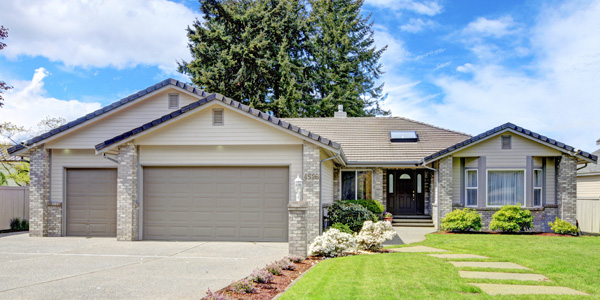
Starting with assets inherited from parents and grandparents, the two of you have succeeded, through your own endeavors, in building those assets into a significant estate. With no children of your own, you have helped with education funding for nieces and nephews and their children, also contributing to various charities. You live in the inherited “family “castle”, an overly large home on the outskirts of a college town, which you’ve remodeled and in which you’re hoping to spend the rest of your days. According to your current estate plan, upon the second of your deaths, the primary beneficiaries of your estate will be three different charitable organizations, with one of those to inherit the home.

Although the current value of your estate is far less than $11.7 million dollars, like many of your friends, you are extremely concerned about how the proposed estate tax law changes will affect your plans. If you make very large gifts to charity this year and next, for example, and the exemption amount is later lowered, would the gift and estate tax be retroactively applied? Even more important, you are concerned about keeping control of your financial assets in order to maintain your own lifestyle. With no children, you must also be assured of adequate “rainy day” money for healthcare needs throughout both your lifetimes.

A reverse mortgage on the “castle” might offer a solution, with the line of credit serving as your “rainy day fund”, allowing you to move forward with the charitable gifts. Part of your housing wealth could be kept in reserve to cover unforeseen medical costs, and part can be drawn on for lifestyle needs. The interesting aspect of a reverse mortgage is that, to the extent you do not draw down the line of credit, the reverse mortgage includes a growth feature (the untouched balance will increase by the mortgage interest rate).

Having a reverse mortgage “rainy day fund” in place for tomorrow can allow you to go ahead with those large charitable gifts today.

(Note: While this column offers no tax advice, it is worth noting that the Treasury Department confirmed that when exclusion amount drops after 2025, there will be no “clawback” of exemptions. See https://s3.amazonaws.com/public-inspection.federalregister.gov/2018-25538.pdf )

#53 Reverse Mortgage Income to Reduce IRMAA

INCOME FROM HOUSING WEALTH CAN REDUCE “BRACKET CREEP”

David Garrison
Home Equity Retirement Specialist
NMLS # 1595194
Serving the State of Indiana
p (317) 644-2595 c (765) 516-0130
e [email protected]

2169 East Rutland Lane, Martinsville, IN 46151
Corporate NMLS #1025894

After retiring from long professional careers, the two of you have been able to maintain a relatively high standard of living based on retirement income supplemented with earnings from employment data security consulting gigs. In fact, 2019 began a string of unusually high income years for you, and you have been able to add a very tidy sum to your jointly held investment accounts, along with updating the kitchen and baths in your home.

All good news, until a recent notice from the Social Security Administration informed you that, beginning in 2022, your monthly premiums for Medicare will be close to triple what you are now paying. Your tax advisor explained that the increase is related to IRMAA (Medicare Income-Related Monthly Adjustment Amount). This, you’ve now learned, is an amount you will pay in addition to your Part B and Part D (prescription coverage) Medicare premiums. Since you anticipate even greater earnings the last quarter of this year and even more next year due to the consulting opportunities arising from pandemic-related staffing issues, this annoying new insurance cost may increase even further, you fear. While your tax advisor had suggested contributing to SEP accounts in order to reduce your taxable income, you are reluctant to reduce your current lifestyle spending to any significant degree.

Tapping housing wealth in the form of a reverse mortgage might help solve some of the “too high an income” issues you describe. Tax-free, lump sum withdrawals from the reverse credit line can provide funding for significant charitable gifts in this and coming years, thus reducing taxable income. Those reverse mortgage withdrawals might also fund contributions to SEP retirement accounts (out of which withdrawals can be deferred until age 72). As your consulting income rise, these two tactics can nicely reduce Medicare premium “bracket creep”.

https://mutualreverse.com/david-garrison

#52 Reverse Mortgage to Capitalize On Home Value Boom

LOCK IN HOME VALUE BY “TRADING” LOANS

David Garrison
Home Equity Retirement Specialist
NMLS # 1595194
Serving the State of Indiana
p (317) 644-2595 c (765) 516-0130
e [email protected]

2169 East Rutland Lane, Martinsville, IN 46151
Corporate NMLS #1025894

Your income has been more than sufficient to keep up mortgage payments of just over $2000 a month. But as retirement draws near (planned for next summer), you’d appreciate being able to erase the monthly payment obligation and use your retirement income to pay for lifestyle luxuries. Liquidating cash reserves and selling a big enough chunk of investment assets to liquidate the mortgage entirely is a plan that lacks appeal because of the tax liability that would generate. Meanwhile, you’re aware of the current “housing boom” will last (several neighborhood homes have sold at substantial premiums, you’ve noted), but doubt that strong demand is going to last. In any event, you’ve decided to remain in your home rather than selling. One move you’re considered is a mortgage refinance (rates have definitely fallen since you purchased the home, and you don’t know how long these lower rates are going to be available).

There’s an alternate plan to consider as a way of taking advantage of the very two factors you’ve mentioned (higher home values and low interest rates) in the form of a reverse mortgage with the purpose of leveraging your home’s equity to pay off the existing mortgage loan. Here’s a general idea of how that might work: Assuming that your home’s value has appreciated to the point of being more than double the outstanding mortgage, your reverse loan would “replace” your traditional mortgage loan, locking in today’s high loan to value via today’s low interest rates. Yes, your home would still be mortgaged; the big difference would be that, going forward, you would be free to choose whether to make monthly (or indeed any) mortgage payments.

With no need to liquidate cash reserves or sell investment assets (or to move), you can take advantage of the twin phenomena you’re noticed – increased home values and low interest rates! Rather than tapping your investment wealth, you’d be tapping your housing wealth as your launch your retirement.

https://mutualreverse.com/david-garrison